Press
Inside the legacy of Robert A.M. Stern - the pioneering NYC architect who designed residences for the rich and famous
In order to push the city’s skyline into the future, Robert A.M. Stern looked to the past.
The late architect’s understated, pre-war style seemed to tower above his modernist peers. His preference for masonry over steel and glass made him both an outlier and a proven investment, producing two of Manhattan’s most coveted, record-setting condo towers.
Stern’s 300-strong architectural firm, RAMSA, announced his death last week. The Brooklyn-born architect, educator and author passed away on Thanksgiving morning at age 86 from pulmonary illness.
“He was a giant,” Samuel White, a partner at PBDW Architects, and the great-grandson of the famed Gilded Age architect Stanford White, told The Post.
Stern founded his eponymous firm in the 1970s. His half-century career, which began with private homes and institutional commissions, reached a late zenith in the 2000s, when he affixed his name and signature style to towers like 15 Central Park West and 220 Central Park South.
Stern’s record-setting 15 Central Park West finished fully sold out in 2008. Stern called the project his “breakthrough,” the New York Times reported. The limestone development was then the most expensive condo in the city — and it lured A-listers, such as Denzel Washington and Sting. Stern was nearly 70 at the time.
“15 Central Park West and its offspring definitely changed the game for a certain kind of apartment building in Manhattan,” White said. “He not only changed the game, but then proceeded to dominate it.”
Nearby 220 Central Park on Billionaires’ Row, completed in 2019, was considered Stern’s magnum opus. The ultra-exclusive limestone palace still claims the country’s priciest-ever home sale, set by hedge funder Ken Griffin’s $238 million penthouse purchase in February 2019.
Manhattan, particularly the Upper East Side, is decorated with more than 20 of Stern’s condo buildings.
Stern was praised by his peers for his classical aesthetic and historical sensitivity. His designs stand in stark contrast to the flashy, glassy towers that dot the rest of Manhattan’s luxury landscape.
“Stern has become a brand name for a certain kind of solid, very trustworthy traditional design that isn’t trying to reinvent the world,” architecture critic Paul Goldberger told The Post in 2019. “What Stern is trying to do is give people the best of the new that looks like the old. I’d compare Stern with Ralph Lauren.”
The success of his buildings proved to fellow architects — and eventual emulators — that masonry and craftsmanship still have a place along modern skylines.
Stern’s pre-war-style towers “reset” super-luxury pricing in Manhattan, appraiser Jonathan Miller wrote in his Housing Notes newsletter, noting that 220 Central Park South is one of few Billionaires’ Row condos to see significant price increases over the past decade.
Stern’s classical modernist style was grounded in the city’s pre-war architectural aesthetics he so admired.
“I think he looked really hard at older buildings, and it wasn’t just a surface phenomenon that he was imitating,” White said.
Stern adored old New York. He was known for dressing in handsome bespoke suits, pocket squares and yellow socks, and had an lifelong love of Fred Astaire films.
Stern authored or co-authored more than a dozen architecture books, including several seminal volumes on New York’s architectural history.
John Hill, an architectural historian and author, called the tome-like series “phenomenal.”
“The six books he did are indispensable for someone like me, who writes about New York City architecture and gives walking tours in the city,” Hill said. “They’re just exhaustive.”
A final edition, “New York 2020,” co-authored by Stern, David Fishman and Jacob Tilove, was published earlier this year.
Long before the supertower commissions, Stern forged a career designing vacation homes in the Hamptons, East Coast collegiate buildings and even Disney resorts.
“In the ’80s, ’90s, he was with other post-modern architects doing buildings that were more ironic in how they used historical references,” Hill said. “Then he kind of shifted to be almost more truthful or more honest with these historical styles.”
Stern’s first Manhattan victory, the red-brick and limestone Chatham at 181 E. 65th St., was constructed in 2000. The stylized building recalled the architectural greats of turn-of-the-century New York, and became the architect’s home base in the city.
Stern’s work extended to museums and libraries, including the Bronx Community College Library and the University of Virginia’s Jeffersonian-style business school. Today’s coveted, shingled colonial revival mansions, so iconic to the high-end Hamptons, are also Stern’s doing.
“He is really responsible, I think, for bringing that back into the mainstream for high-end residential architecture,” White said. “And there are a lot of architects in New York City who follow that lead”
Stern was a celebrated educator, as well. He taught at his undergraduate alma mater, Columbia, and served as the longtime dean of Yale School of Architecture, where he also attended as a graduate student.
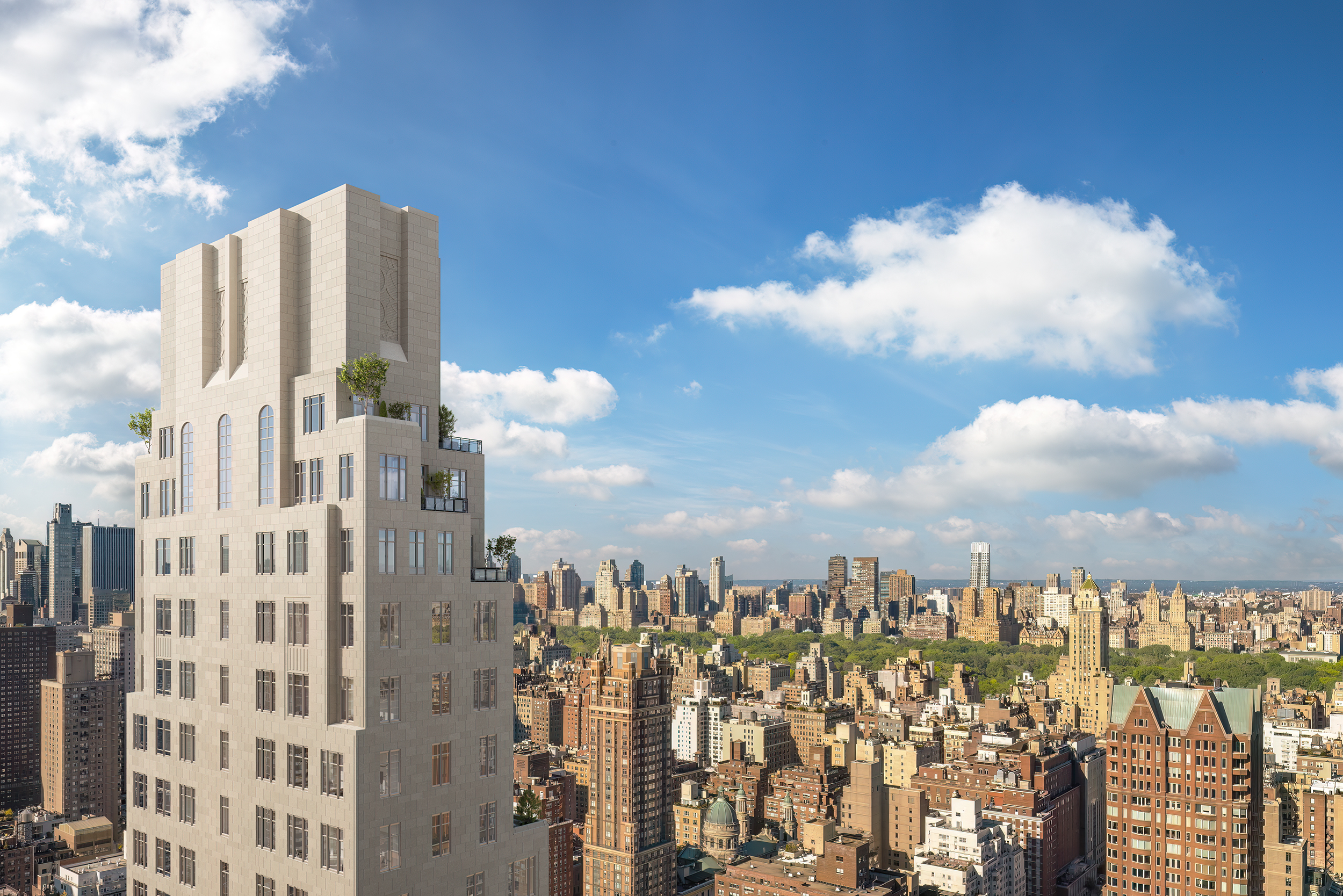
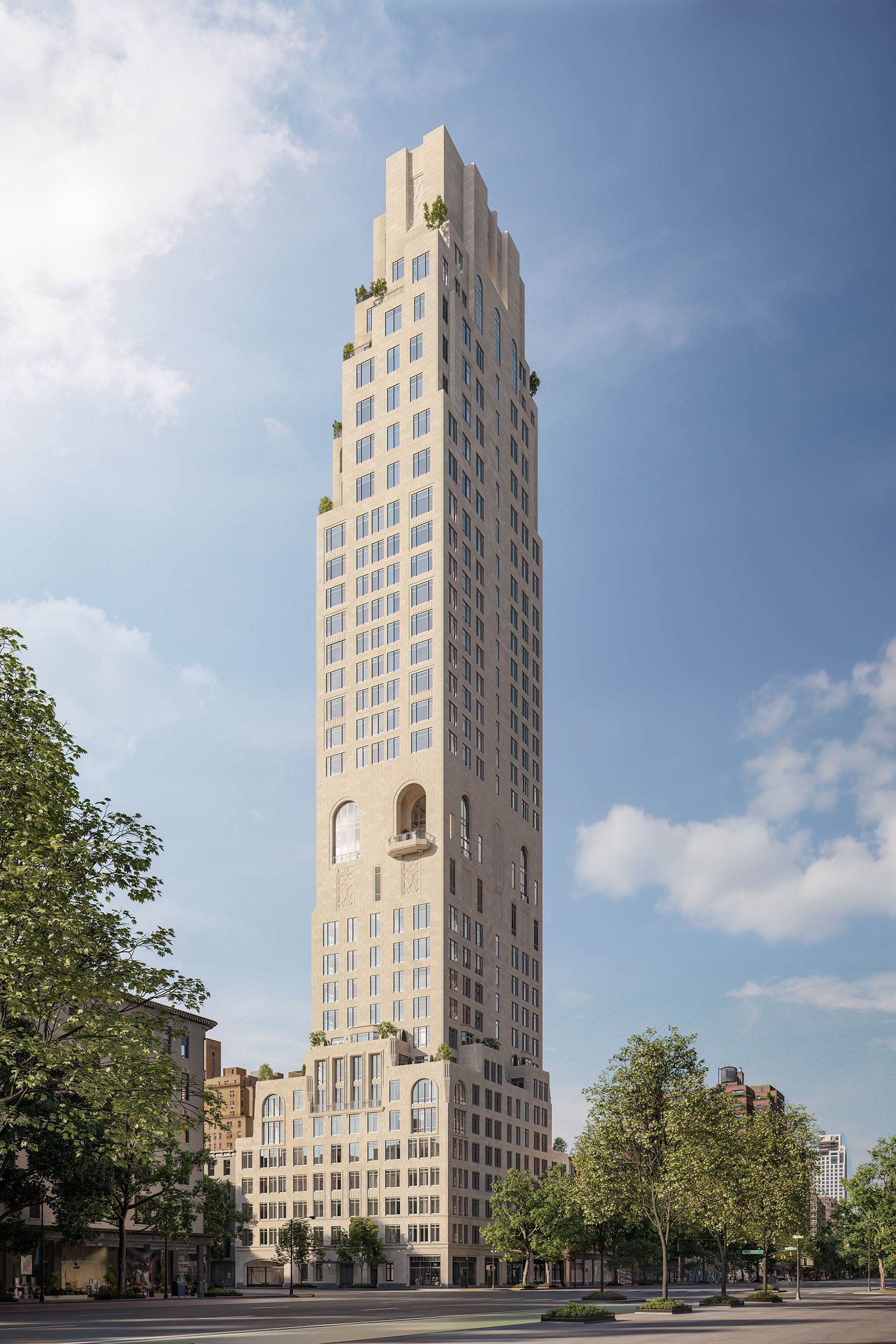
One of Stern’s final tower projects, 255 E. 77th St., topped out this spring. Its Gothic and Art Deco-influenced design, with carved oak leaf details, loggia and a decorative crown, are pure Stern — a clear tribute to the city’s architectural heritage that he so adored.
“You have to be a little bit envious,” said White. “At the very least, you have to be admiring somebody’s ability to get that much done.”